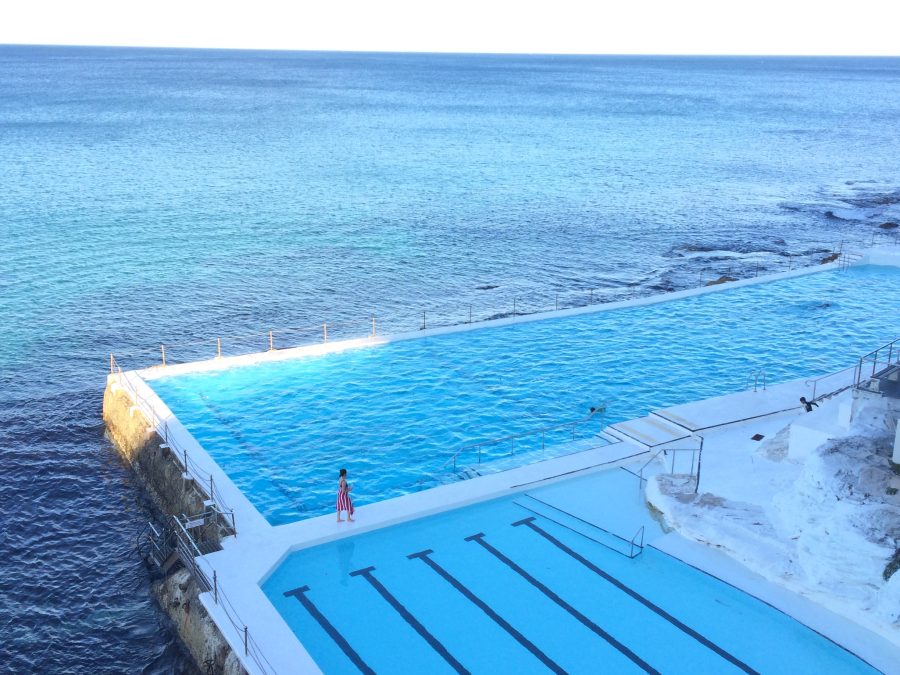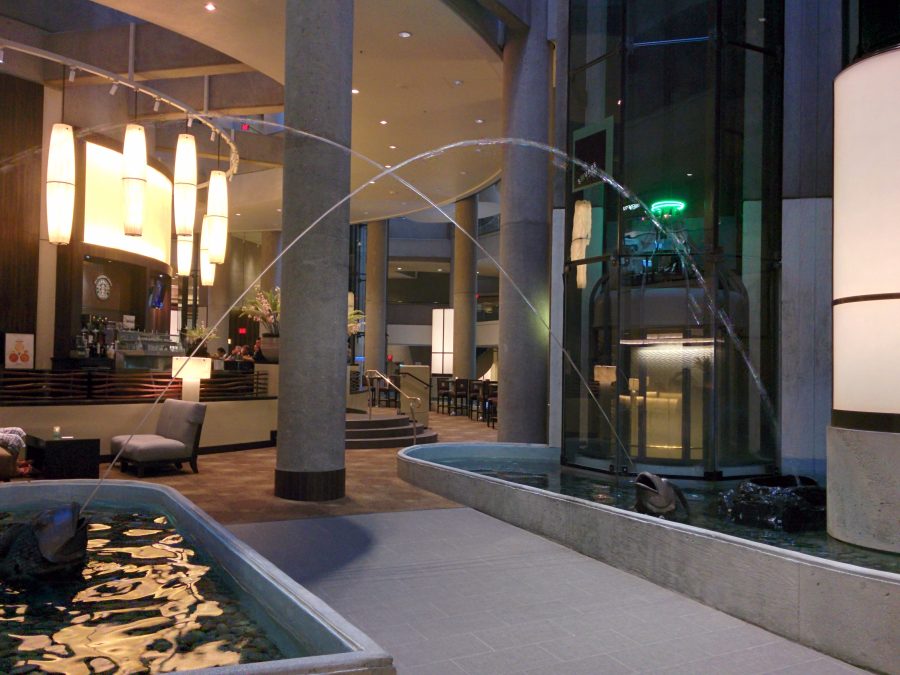
A reflecting pool this size in a wind corridor is usually a losing proposition — the moment the water surface breaks up, the whole point of the feature disappears. The overflow edge here runs on a variable-height weir rather than a fixed lip, so the working water level can be dropped a few millimetres on windy afternoons to keep the surface below the disturbance line instead of fighting it.
The coping is low-iron float glass rather than stone, chosen specifically so the pool’s own edge doesn’t compete with the mirror it’s supposed to frame — stone coping throws a warm cast across the first half-metre of reflection that low-iron glass simply doesn’t.